Sunday, April 30, 2017

How to Make a Battle Map

Combat is an important part of the D&D experience, yet how can one make a fun map for their players to fight on? There are actually a few ways to get a map quickly without having any real difficulty.

The easiest way is to disregard the map all-together and the G.M. just keep vague track of where people are in their head. That can lead to many confusing experiences where the G.M. loses track of where someone is, or people keep thinking they are closer to a target than they really are.

Scratch paper is a great way to make a quick map. This method is very spur of the moment so most of the time the paper is small and people are represented by simple icons. A lot of erasing and redrawing is needed with this method. A G.M. could draw some basic maps in ink a head of time, and then reuse the material. The issue there would be the wear and tear on the paper from continually erasing and redrawing on it.

One could also use a map from online. D&D is over forty years old, so it should have plenty of maps floating around in images only search engines. What's important to note here is that this method usually doesn't work well when printed out. First most printers are only going to do the 8''x11'' letter size paper, and to keep something in color could require a lot of ink. Online maps work best for online game sessions, such as Roll 20 and Fantasy Grounds. These allow the players and G.M. to see where the various player and non-player icons are on the map. There are also sites that can randomly generate dungeons and the battle maps can just be the dungeon rooms themselves. (D&D Dungeon Generator).
Figure 1: Map from online. (anomiecoalition).
Similar to the scratch paper method would be the use of a white board. White boards would also use very simplistic representations of the battlefield; however, white boards can easily have their contents be redrawn and come in much large sizes than scratch paper. Laminated boards can function in the same way as well.

Figurines can be used instead of icons. While these are more costly and incases require the time to pain them oneself, figurines remove the need of an icon or constantly redrawing character positions on the map. Due note that if one is using letter size paper that the figurines would be best kept small, or have multiple papers puzzled together.

In truth one could ignore the use of a map with figurines much better, and simply use other items as a means of portraying the battle. Instead of a log bridge, through the water bottle there. Instead of a river, use some string to represent it.

There is also the question of angles. Most battle maps are bird's eye view maps, some though can be isometric. The purpose of an isometric map is to give better feeling of depth or size; however, it makes the process of properly gridding maps with squares/hexes more difficult. It also makes the use of figurines or other icons more difficult, as they can't be scaled down to the perspective.
Figure 2: Isometric Map. (NA).
If someone is willing to pay the extra money, they can buy tiles to assemble together.  If that's too expensive you could always use old cardboard, cut it into equal sized pieces, then color them with acrylic paint. This will provide much cheaper and customizable tiles for the players to use in combat.

Drawing off digital games, specifically Neverwinter to keep a D&D focus, the battle maps can be better focused on. "With that in mind the environment team could take existing maps and modify them to suit the narrative of the story arc." (Julia). Random maps don't need this, but when designing a campaign make certain that the battlefield adds or tells its own story.

When making a map consider what actions can be done on it. If your players are in a bar then there are tables for them to flip over as shields, counters to stand, and chairs as improvised weapons. Doing a large area of effect spell could ruin the building itself. Props are a way to give a sense of environment to a map. To give an idea of how to build a map the one in Figure 3 will be deconstructed.
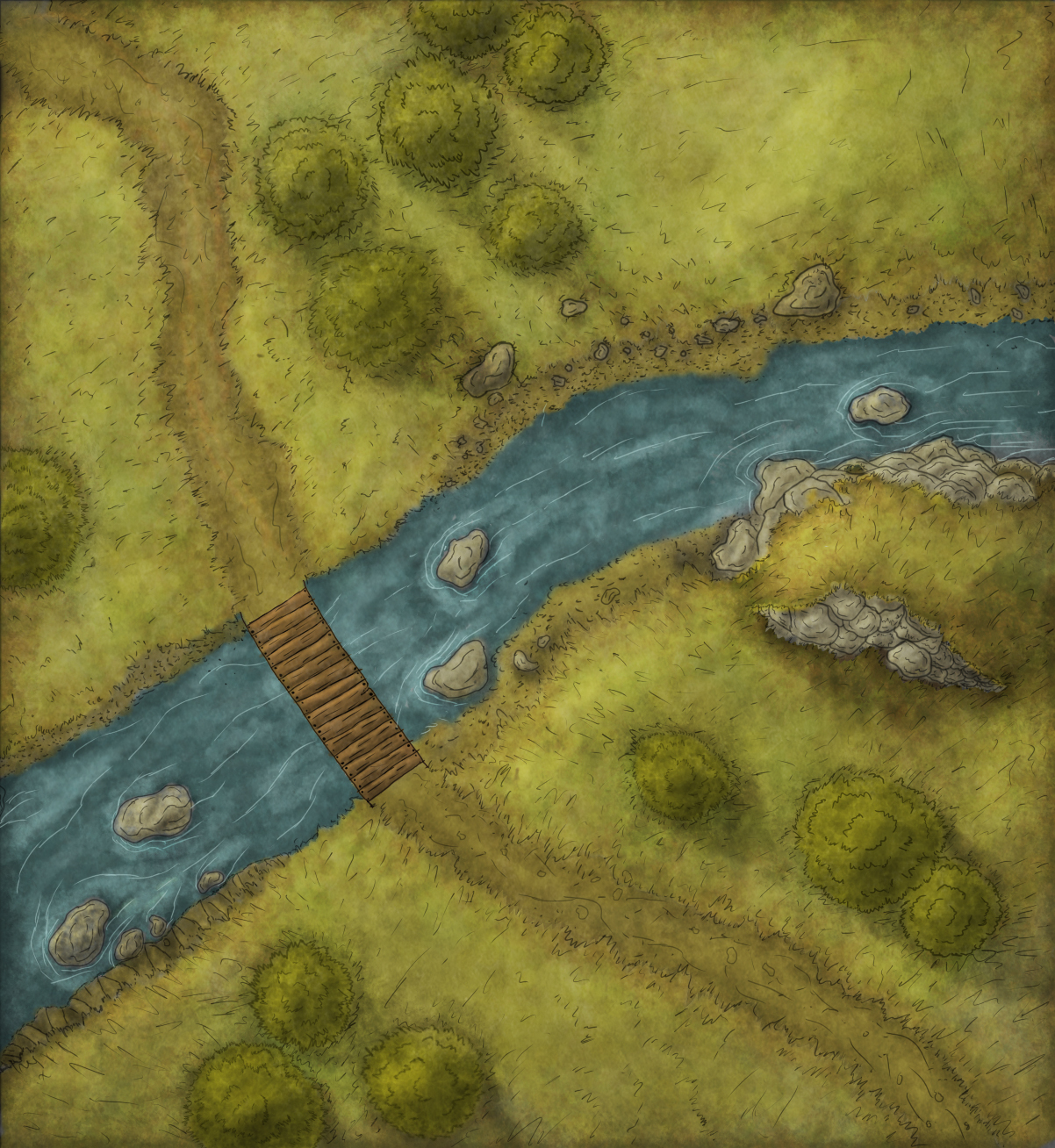
Figure 3: River Crossing Map. (eVile-eAgle).
At first this map seems fairly simple but there is a lot of potential. The road shows a clear sense of direction, reinforcing that the encounter happened while the players were travelling. There is also a river of unknown depth with a narrow bridge going over.

The bridge creates a clear choke point during a fight. There is also flexibility in the map. The river has several stones sticking out of it that a player or nonplayer character could use to get across the river, avoiding the bridge; moreover, the G.M. could have the river not be very deep. Reducing the depth of the river would create difficult terrain, so avoiding the bridge and stones would greatly hinder anyone wading through to the other side.

Figure 3 also has foliage. The bushes can act as a means of concealment. Rogues or other stealthy characters can then use the bushes as means of hiding from enemies. The bushes could also be set on fire in a fight to add to the chaos of it.

Finally the map has differences in elevation. The first difference is the river bank; it being a sharp slope to the water. More notably is the rock outcropping on near the river towards the right edge of the map. Either the players or nonplayers can use this to gain advantage on ranged attacks.

While a very simple map it employees a sense of story, agency, props, and elevation. None of those items need to be complex. Below are a series of pictures I created that go through the process of creating a basic battle map that incorporates very simple elements. The software used was Paint.Net.
Figure 4: Foundation
First I start with a 6x4.5 inch white space to build on. Next I make a rough outline of the map parameters, along with picking the angle. I decided to go with a wall battle scene to fit with my Ruination of Bran campaign I created. To emphasize the elevation I made the map isometric. For larger scale areas like fields this would be more annoying, but I only have to grid a very small space in this instance due to the narrowness of the walls.
Figure 5: Laying out
Second I make another layer in the Pain.Net program to start creating the actual walls. This process only requires limited definition and need not be fancy. I simply want to give a clear picture of how the walls are. A useful tip for this program is also to make one item detailed [the battlements] and then copy paste it with slight tweaks where needed. I also create a see-in border for the tower should the players go in there.

While I work on the main layer that will become the battle map, I do keep the initial drawing of Figure 4 visible. The lines are there to act as a means of guiding me to ensure I keep the line angles relatively consistent throughout the process.
Figure 6: Starting Stairs
Third I add on to the walls and tower some more. I created more battlements for the top of the Tower. I also wanted to show the defenders didn't think enemies would get past this wall, so I didn't add battlements to the side facing the town. It also puts less work on me. After that began the process of creating stair cases. I decided to remove the lines I made for guiding the walls and replaced them with those of stairs. For the lower more obscured parts of the tower I hid the majority of its stairs beyond the scope of the see-in border to reduce my workload.
Figure 7: Stairs Complete 
Fourth I continued to detail the stairs. It took some times but I managed to create individual steps and a railing. More importantly though I added a means to measure distance once the grid is set in place, along with giving a compass for direction. I also added a title for the map in Algerian font.
Figure 8: Almost Done
Fifth I began to add in props and other environmental effects. I started by added deformations to the wall on the left side as a means of showing both that the city had been under siege and to remove white space. Some brick patterning was added too in various spots to remove white space also, yet again not everywhere as a mean of reducing white space. Next I went about adding a few props into the tower, beds, barrels, crates, and so on. This was to add a sense that the space was used. Then I added a rope with a grapple to indicate how the players reached the area. I ended this part by placing a city building in the background near the wall to remove white space and give the player's the idea of jumping off the wall rather than fighting.
Figure 9: Complete
Finally come the grid lines. Normally I don't use them but a large assortment of people do. This process is tedious but valuable. I made a separate layer to create a large blue gridline over the wall and tower. After that I went into the layer the wall with details were on and began to redraw over the blue line in black. Once completed I deleted the blue grid layer. Alternatively I could have erased around the edges and merged the layers, but I didn't want to risk missing anything.

Completed I now have battle map for my campaign. I can also save this picture and reuse it in the future, removing the text if need be. The map itself gives the players a sense of height and narrowness. There are numerous choke points and little path to escape beyond risking a jump to the buildings or climbing down the rope. The map was designed for an encounter that was time sensitive, with more enemies coming after a certain amount of rounds. This forces players to be especially quick. That makes the choke points of the narrow doors and stairs even more difficult. If they are fighting outside the encounter also has ranged enemies firing down upon them.

There it is the different ways to make battle maps, and my own loose step by step method for making one. Feel free to use the map I made if you want too.

Works Cited

anomiecoalition. U1 - Sinister Secret of Saltmarsh (Al-Qadim Revision). Drunken Nerdy. March 24, 2013. Web. 04/30/2017. Accessed <https://drunkennerdery.com/2013/03/24/u1-sinister-secret-of-saltmarsh-al-qadim-revision/>

D&D Dungeon Generator. drow. 2016. Web. 4/30/2017. Accessed <http://donjon.bin.sh/5e/dungeon/>

eVile-eAgle. River Crossing Battlemap. DeviantArt. 2011. Web. 04/30/2017. Accessed <http://evile-eagle.deviantart.com/art/River-Crossing-Battlemap-265852012>

Julia. Developer Blog: Quest Environment. Perfect World Entertainment, Inc. April 17, 2017. Web. April 20, 2017. Accessed <https://www.arcgames.com/en/games/neverwinter/news/detail/10469103>

NA. Author Not Available. Publisher Not Available. Date Published Not Available. Web. 04/30/2017. Accessed <http://cdn.obsidianportal.com/assets/6299/DandD1.jpg>

Monday, April 24, 2017

Asteria Rising Update 3

I haven't gotten to work on the game nor this blog much with finals coming up. I have a post/page idea in the works but I simply can't follow through with the current work load. I'll try to complete it before the end of next week though, promise.

Wednesday, April 12, 2017

New Pages Up

I posted two new pages about game mechanics. The first was published last week, it is about why the dice mechanic is used in D&D. The second goes over the use of Alignments, why they are used and how players and GMs can interact with the various combinations.

Alignments

Why we Roll

Sunday, April 2, 2017

Asteria Rising: Update 2

Work on Asteria Rising has been going well, I've fleshed out an initial version of one of the classes already. Also set in some basic rules of how to play, but there is still a lot more to go. To keep people entertained I'll present a completely homebrew monster for you all.

The image itself was made using Paint.Net, I took THIS free to share and use commercially licensed image to create a base for the head, which I traced. Then I went about forming the rest of the body around it.

Asteria is an alien world; however, I can't make an entire ecosystem. To help with this I came up with the Ark Project. It was a terraforming failsafe should the colony ship have landed on an uninhabitable part of a planet. That way anyone using the Asteria Rising game could add in their own unique creatures or those from Earth at leisure.

Is the above creature a native alien? No, it was part of the Ark project. What I've placed in the document is that the Ark Project went into effect and malfunctioned while the ship was landing on the wrong planet. Asteria itself landed prematurely, so the colonists have been in stasis the whole time. The Ark Project has been malfunctioning for over a century [exact time still being worked out].

The above creature is thus an aberration (meaning strange). I haven't codified it yet, but I plan for most creature categories to be Native, Earth, Foreign, Aberration. All aberrations having been made from the malfunctions of Ark. Normal animals like birds, fish, badgers, and humans are therefore just classified Earth. Native are creatures from the planet. Foreign is anything not included in the other broad categories.

The statistics aren't finished, but here is the information on Asteria Rising's first monster.

Vile-Horn


Lupus Homo Cornibus Formidulosus (dangerous horned wolf man). Vile-horns are aberrations created during the Ark Project malfunction. These creatures have made a terror for themselves, becoming apex hunters.
.
Nocturnal. Vile-horns are capable of hunting in daylight, yet prefer to do so at night. The bioluminescence effect on their eyes attracts smaller prey, and provides superior eyesight.

Pack Hunters. While vile-horns can live in solitary, the norm seems to be in packs ranging from three-seven. Their hierarchy seems to be a typical pack systems. The strongest rules the pack, with a mate acting as a coruler.

Intelligent. These creatures can set basic ambushes for prey and hunt over a long distance. They have no known tool making abilities, but their brains are built similar to Homo Sapien Sapien.

Diet. Vile-horns primarily eat any meat they can obtain, mostly fish and medium sized quadrupeds. Vile-horns are also frictionally omnivorous; they have molars for the eating of basic fruits, which they will partake in if no suitable meat source is available. Vile-Horns will eat humans, and have no fear of them..

Vile-Horn
Medium aberration
Armor Class 16 (natural armor)
Hit Points 75
STR    DEX    CON    INT   WIS   CHA
20(+5) 16(+3) 12(+1) 10(0) 10(0) 7(-2)
Skills Stealth +3, Survival +2
Senses Night vision 120 ft., passive perception 12
Languages –
Challenge   

Tuesday, March 28, 2017

Asteria Rising: Update 1

I've been working on creating a whole new rendition of Dungeons and Dragon's Fifth Edition. Not anything too far afield, but it will have its own unique vibe. The idea started with seeing how the Dungeon Master's Guide provided tables for guns and alien technology. Then I thought, "what if I made a science fiction campaign for my group?"

After that it began to quickly morph into needing to tweak certain skills and abilities, then realizing the classes won't work and having to scrap and create new ones, then having to make new abilities, so on and so on.

Now what I have is a currently 7 page document that is no where near complete that goes into the rules for this new version of D&D I'm making. It also cements a few house rules my team usually uses, while encouraging certain actions more. E.g. my group rarely uses the medicine skill. I've buffed medicine to make it the main form of healing outside of combat, and greatly reduced healing in combat because there is no magic in this science fiction version.

It is still an alpha version [Asteria Rising 0.03]; however, I will post my progress on it to the blog over time. Here is a draft of remade character sheets for the game.


Thursday, March 23, 2017

Short Story Out on Amazon

While not related to D&D I did release a 7,000 word short story. It is a fantasy tale based off a book I've been working on. The link to the Amazon Store page is below.

https://www.amazon.com/dp/B06XS7TQPP/ref=sr_1_1?ie=UTF8&qid=1490193968&sr=8-1&keywords=ASIN%3A+B06XS7TQPP

Friday, March 17, 2017

Atypical Characters: Not a Ranger

Playstyle certainly lends to giving a character its own unique features. This posts will discuss the idea of a barbarian class filling in the roll of an amateurish ranger. Ranger's are typically used to fill in both a scouting and ranged damage roll for the party. Barbarians are typically used for raw brawn in melee. This one is more versatile.
Barbarians can have more AC, which comes from a special class feature [Unarmored Defense]. It combines their passive AC (10), with their constitution and dexterity modifiers, only if they have no armor. (Player's Handbook, page 48). The above character has 16 AC for its base, plus two more for its shield. I used the Ability Point Cost table on page 13 in the Player's Handbook to ensure the character had superb dexterity and constitution for level 1.

The Outlander Background was chosen, with only a tad of the wording changed to better fit the character. This is to give a ground for whenever you make a backstory for the character. Generally, a barbarian who "believes" he is the last of his tribe and thus seeks to make their name in a great song of glory.

Playstyle wise, the character is stealthy, very stealthy. Stealth is useful for a party as it allows a character to inch forward and scout a position; however, there is anxiety in this. No matter how high one's stealth skill is, they will eventually fail to roll and be exposed behind enemy lines. Rogue and Rangers will often be endangered by this, due to their proficiencies in lower AC armors. This character doesn't have that problem.

The barbarian has a high stealth skill, yet when he inevitably fails his stealth check the character has a lot of AC and health. Worst case scenario the barbarian had their shield slung to their back, giving them their base 16 AC and will need to take an action to bring it out. The character also has a longsword which is versatile (can be used with one or two hands), so if he can't bust the shield out he will be doing more damage [1d10+strength modifier rather than 1d8+strength modifier]. Not to mention the Rage mechanic. (Player's Handbook, page 48).

Having really high dexterity doesn't just increase the stealth skill and AC, but also ranged damage. This is why I opted to pick a shortbow for the character. He actually has a higher hit chance with the bow, rather than the word. The highest damage the character can do with the bow is 9 [1d6+3 piercing damage], and the highest with the longsword when used with one hand is also 9 [1d8+1]. The fact the bow has and extra +2 to its hit chance means that the barbarian will be doing more damage over time with the bow because his ability to hit is greater.

This means the character can adequately fill out that ranged roll at early levels. A ranger or archery based fighter will eventually outpace this character. Especially if either the ranger or fighter picks their Archery archetypes [giving +2 bonus damage to ranged weapon attacks]. The same could be said about a defense specialized fighter or paladin against the barbarian that continues to not use armor, while those other classes have plate armor.

At level 3 the character will get the Primal Path option. (Player's Handbook, page 49). This will allow the character to become more potent or versatile, depending on what you choose. You can pick the Berserker path, then specialize in melee. This would be best if there are other ranged players in your group. That means this character's early ranged capabilities won't be needed much longer, as the weaker starting of rangers, archery fighters, and mages, are soon to dissipate.

Whether you want to keep specializing in ranged, melee, or other, the path of the Totem Warrior will be useful. Totem warrior focuses on melee as well, yet not in terms of direct damage. For instance, the Bear totem makes you resistant [half damage] from all damage types except for physic. The bear totem aspect described is just for level three, there are two other higher level aspects to it. Same for the wolf (which deals with enhancing your allies) and eagle (which involves quick movement).

If you wanted to keep the above character functioning in a ranged or stealthy manner, using the eagle totem would be best. At third level the eagle totem does this, "While you're raging and aren't wearing heavy armor. other creatures have disadvantage on opportunity attack rolls against you, and you can use the Dash action as a bonus action on your turn. The spirit of the eagle makes you into a predator who can weave through the fray with ease." (Player's Handbook, page 49). That will increase your ability to get into a position to engage in ranged combat. Considering the character's high base AC and health, the barbarian will able to act as a forward shock troop for the party in a fight.

Later on at level 6 with the eagle totem, "You gain the eyesight of an eagle. You can see up to 1 mile away with no difficulty. Able to discern even fine details as though looking at something no more than 100 feet away from you. Additionally, dim light doesn't impose disadvantage on your Wisdom (Perception) checks." (Player's Handbook, page 49). For a scout or ranged character this is very useful. The barbarian wouldn't even need to get nearly as close to the enemy to scout them as other characters would, unless the party was in a really confined space [such as a cave or castle interior].

Finally at 14th level, "While raging, you have a flying speed equal to your current walking speed. This benefit works only in short bursts; you fail if you end your turn in the air and nothing else is holding you aloft." (Player's Handbook, page 49). This one works much like the first, in that it enhances the character's ability to move into a ranged position quicker. Image a fight and you decide to use this skill to get to the top of a tree or structure, well out of melee range from the enemy. On the other hand you could use it to quickly get to the enemy leader and starting fighting them in melee.

In either regard, the character is meant to be an extra stealth character that can switch between ranged or melee seamlessly.